
“It’s cool to make music with cheap gear!” - The realities facing rising artists in 2026 - why affordable gear matters, and practical recommendations to make it work.
“It’s cool to make music with cheap gear!”
The realities facing rising artists in 2026 - why affordable gear matters, and practical recommendations to make it work.
By Ethan Wilson
It’s expensive to be in a band.
Rehearsal rooms. Studio time. Fuel. Food. Accommodation. Venue hire. Merch printing. Replacing strings every other gig. The capo you forget and have to panic-buy. The cable you double checked before the show - that dies mid-song. It all adds up.
As venues shut and costs continue to rise, a trend that I've been noticing recently with artists is a downsizing of rigs and an appreciation for cheaper instruments and equipment. And sometimes, less is indeed more, limitations can make people get creative.
I’ve been gigging in Scotland since I moved here all fresh-faced from Ireland when I was 18. I’m 22 now. I’ve shared stages with brilliant musicians, learned from people far better than me, and had amazing opportunities I don’t take for granted. But still, the financial barrier to entry is very real, especially for young bands trying to get their first few shows under their belt.
And at the same time, we’re constantly being sold something.
Open Instagram and you’re bombarded with reels and players showing off their swanky new £1,500 amp or pedal. The tangle of wires, buttons and flashing LEDs of huge, door-sized pedalboards. For guitar players just starting out, it’s all a bit much, and there’s a subtle implication that if you don’t have “serious” gear, you’re not a serious player.
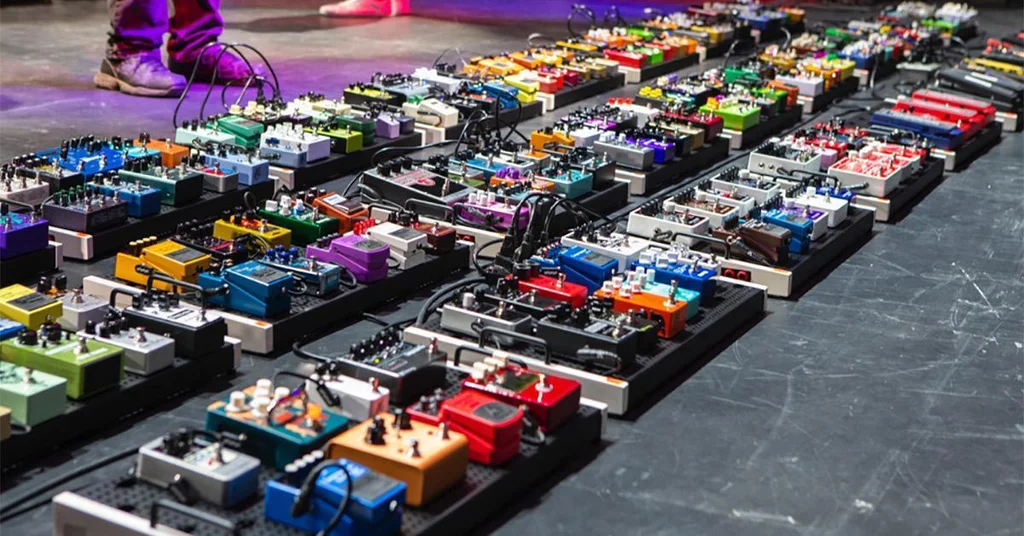
‘World's Largest Pedalboard’. Image: Sweetwater Sound Co.
It’s easy to feel that pressure; I certainly have.
Your first band’s rig often ends up loaded with every bell and whistle that feels almost ‘essential’ at that stage. I know mine was. Huge pedalboards, layers of options for every sound I could conceivably think of. On paper, it looks impressive, has that ‘cool factor.’ In practice, did I really need to bring two guitars and three flavours of fuzzbox to every gig?
Probably not.
It was heavy, awkward to carry, time-consuming to set up, and rarely used to its full potential. Most sets end up revolving around one or two core sounds anyway.
And over time, I’ve learned a thing or two about what I actually needed. Nowadays, my rig consists of one main guitar and two pedals haphazardly tossed into a gig bag. The setup is straightforward, easy to manage, and it covers what’s needed without much fuss. It might not suit everyone, but it does the job for me.
And that’s a realisation in itself; a lot of what musicians are told they need, they don’t. At its core, a guitar rig is made up of three fundamentals: Wood, wires, and speakers.
So, what actually matters when choosing your first guitar rig for gigging? To get a real sense, I asked a few fellow musicians in Scotland about their first rigs and what mattered most when choosing their gear. Their answers are surprisingly consistent!
One artist told me, “An Epiphone Les Paul starter kit,” while another said, “Squier Telecaster Deluxe, my dad’s old Ibanez Tube Screamer and an Orange Crush 12 practice amp. For a good while before that though, I just had an Eastman acoustic and that was it!”
My own first rig was nothing to sniff at. With birthday money one year, I bought the cheapest Epiphone Les Paul you could get, plugged it into my wee computer, and used Rocksmith as a stand-in for an amp. It wasn’t glamorous, but it did the job. We all start somewhere.
So, when I asked artists what’s most important when they are choosing equipment to buy, one response said, “Affordability and tone,” while another added, “Versatility and value for money.”
Your instrument is your tool to serve your music, and tools shouldn’t break the bank. And since 2020, affordable guitar brands have risen in quality exponentially; brands like Squier, Epiphone, Cort, Yamaha, Epiphone, even Harley Benton are going toe to toe with their more expensive counterparts. None of us can afford the big brands anyway.
My current gig rig is one guitar, Yamaha Revstar, and two pedals; a TC electronic ‘Plethora X3’, a multi-fx pedal with all the modulation, delays and reverbs you’ll ever need – and it’s even got an app – and a Tone City ‘Bad Horse’ for a clean boost/distortion.
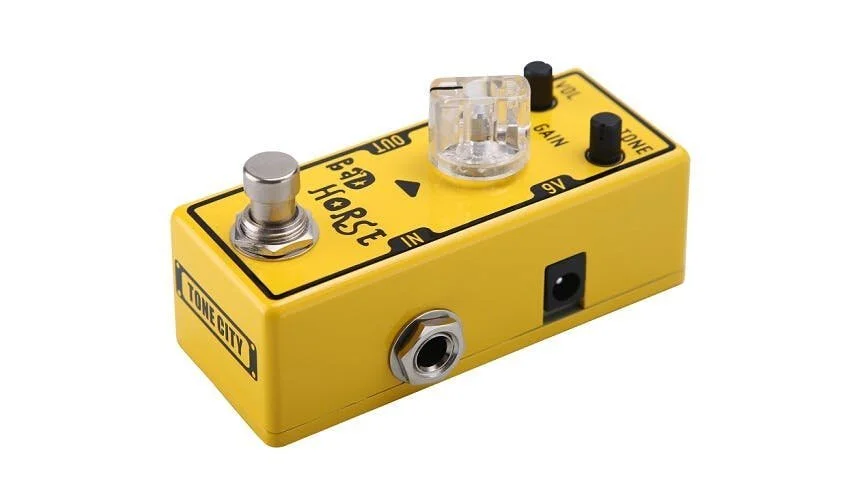
Tone City 'Bad Horse' Overdrive Pedal. Image: Andertons Music Co.
I’ve recorded with it, travelled up and down the country, and gigged countless times with this setup. Most importantly, it travels light, all fitting snugly in my gig bag; something that matters when you’re bouncing between buses, venues, studios and sessions.
Guitar wise? Shockingly, one of the best guitars I own, that has been used live and in the studio, is a second-hand squire Strat from the early 2000’s that I went halfers on with the singer in my first band - £90 all in, and it absolutely rips.
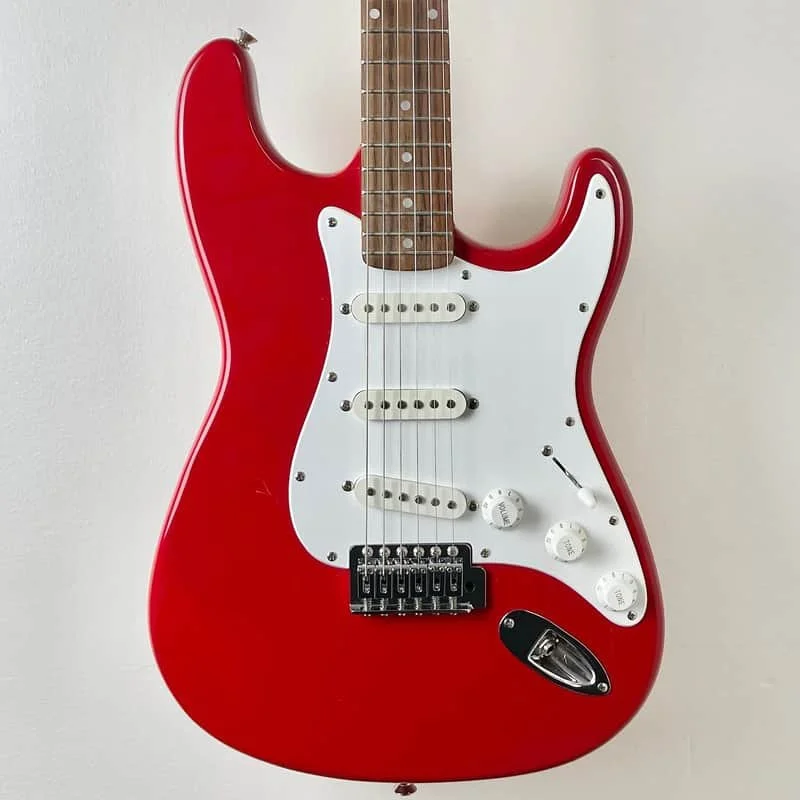
Squier Standard Stratocaster, 1989-2000. Image: Reverb.com
Don’t be afraid to buy second hand – places like Reverb.com, Facebook marketplace, and even local guitar shops can have some great finds.
Amp-wise, I have an old Boss Katana at home, and again, it’s incredibly versatile with a whole host of built-in Boss effects. Live, however, venues will usually have amplifiers as part of their backline, which is what I mainly rely on when playing outside of the city I’m based in.
As a rule of thumb If I haven’t used a piece of gear in a while, and can’t realistically justify keeping it, I’ll sell it for something more appropriate, or to reinvest that into my music and band.
Of course, the pressure to own expensive gear is real. One musician explained, “Social media exposure to what their favourite guitarists use makes people feel like they can’t compete with lower-tier or cheaper gear.” Another noted, “Definitely, but there are also a lot of artists who have really inspiring success stories and are open about how they got to where they are without expensive equipment. Good gear doesn’t guarantee a good song; it’s all about the player! … It’s cool to make music with cheap gear!”
Even bona-fied legends of the old guard of Rock have recently revealed the surprisingly modest setups used to record some legendary tracks.
‘Queens of thew Stone Age’s’ Josh Homme has famously gone on record with his use of the ‘Peavy Decade’ amp when recording the unmistakable, sputtery, fuzzy guitar tone on ‘No One Knows’ – a wee practice amp that, up until recently (cheers, Josh), would have set you back less than £50 pounds.
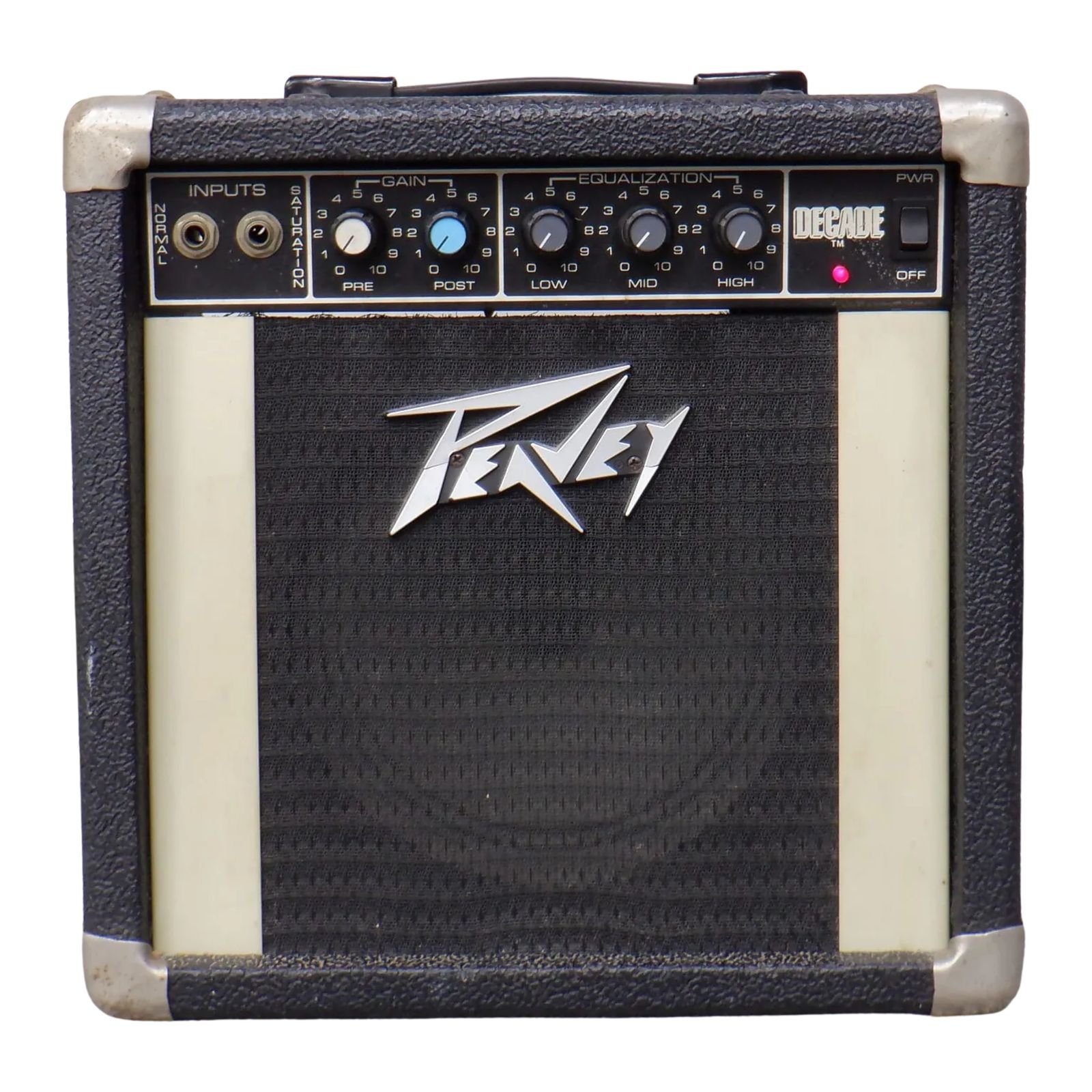
'Peavey Decade'. Amplifier. Image: Reverb.com
Last year, ‘Pink Floyd’s David Gilmour made the rounds in guitar circles after an interview with Guitar World magazine, saying he has been regularly using a ZOOM multi-fx pedal over the last 30+ years, and used it in the studio on both Pink Floyd and his solo albums.
I’ve always kind of dug the clunky plastic enclosures and retro stylings of ZOOM multi-fx’s. Peak 90’s vibe, and they aren’t all that expensive. However, they wouldn’t have popped into my head if you asked me what a ‘guitar hero’ would play through.
And yet, they’ve appeared in the hands of artists like Johnny Marr, The Cure, and Nine Inch Nails, to name a few. Gilmour reasons it’s his familiarity with the pedal that keeps it in his studio after 30 years; “It’s got lots of good sounds and I know how to adjust them.”
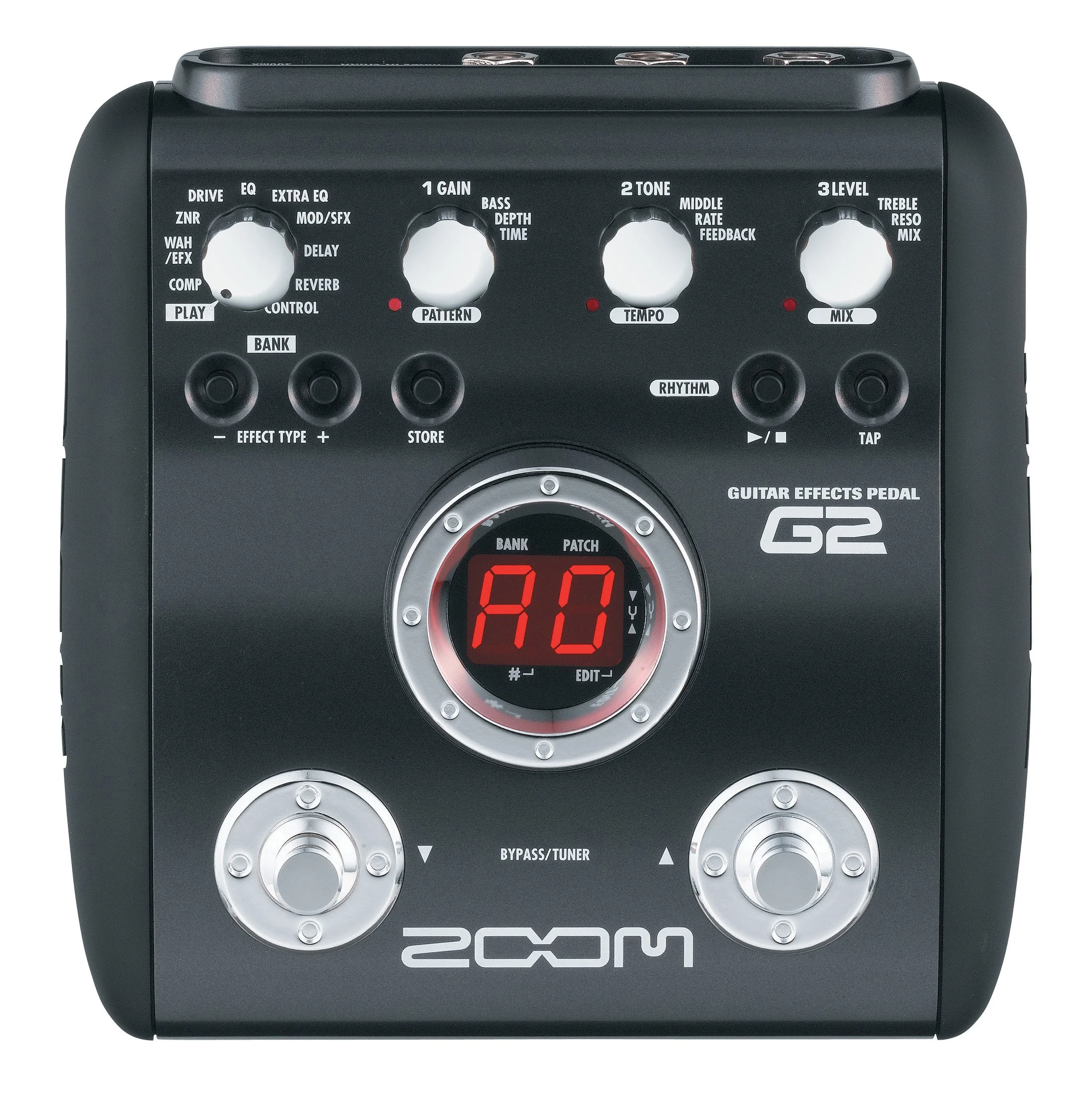
ZOOM G2 Multi FX Pedal. Image: ZOOM Corporation
I believe the reputation that budget equipment gets actually stems from players misattributing the awkward or rough sounds in their heads to the gear itself, rather than memories of our own beginner playing, when none of us knew how to get a good tone in general.
Most budget/entry level guitars, pedals and amps are far more usable than most people give them credit for. More often than not, it simply comes down to knowing how to use what you have.
For young artists, it’s more important to learn your gear than to have the most expensive setup in the room. There are hundreds of free resources online on YouTube, Reddit and guitar-specific forms that will help you get going in the right direction - and don’t listen to the gear snobs and haters in the comments – you can get a usable sound out of almost anything!
Beyond the equipment, the practical realities of being a young artist have never been more challenging. “The most expensive part is upkeep and lack of monetary return from output, such as low-paying gigs, travel costs, repairs,” says one artist.
Another explained, “The issues are still really stemming from large, untouchable companies engulfing everything for profit. These companies dominate the music industry with maximum profit in mind and compete against smaller independent promoters, who often understand the value of investing in acts more and genuinely want to nurture up-and-coming talent.”
Despite all this, the outlook is optimistic. The DIY scene is growing and attitudes are changing. “If it keeps going as it is, there is a lot of great music growing out of Scotland and hopefully gets a platform. Ideally there would be more spotlight on truly talented small bands,” one says, while another added, “It would be great to continue seeing current independent promoters building on their success, and it would be nice to see some new stars with determination for change too!”
What has emerged is a community that’s resilient, resourceful, and inventive. “To be honest, I was surprised at how manageable it is to put on your own DIY gig at a small local venue!”
“Most musicians, myself included, are not naturally business-minded though, and it can be really daunting to plan everything, and waiting to see if you’ll break even can be stressful too.”
However, the overall message is hopeful: “Put on your own gigs” and most importantly, “don’t sell yourself short!”
I’ve seen that resilience and resourcefulness seeping into the attitudes of players for the last few years, as more and more seem to be ditching the notion that a massive, expensive rig is essential to make serious music.
The result is a scene that feels increasingly self-sufficient, with musicians learning to work with what they have, supporting one another, and proving that creativity and determination count for far more than the price tag of the gear on stage.
1. Janelle Borg, ‘“This is the secret weapon... This thing is incredible”: It’s finally here – Josh Homme teams up with Peavey to recreate its sought-after Decade amp – and it has a host of studio- and stage-ready upgrades’, Guitar World, 24 January 2025 https://www.guitarworld.com/gear/amps/josh-homme-peavey-decade-too
2. Jackson Maxwell, “David Gilmour uses a 30-year-old Zoom multi-FX for his home demos,” Guitar World, 4 October 2024, https://www.guitarworld.com/news/david-gilmour-uses-30-year-old-zoom-multi-fx-at-home