
"Why should you care about disability in Scotland's music industry?”
"Why should you care about disability in Scotland's music industry?”
Written by Daniel Leckerman, founder of The Harmony Dialogue, a Glasgow-based platform promoting accessibility across the UK music industry. It amplifies the voices of disabled, neurodivergent, Deaf, and chronically ill creatives, promoting disability culture and destigmatising access. Through workshops, content, and consultation, it shares resources that support inclusive creative practice — helping increase awareness, representation, and long-term cultural change across the sector.
Disabled people have and always will contribute so much to society, including the music industry. There's a million and one ways to be an artist, and also even more to being disabled.
Approximately ¼ of the Scottish population are disabled. The number of 16–34 year olds reporting a limiting health condition doubled between 2011 and 2022 (The Scottish Government).
From the UK Music Diversity Report 2024, 16% of respondents identified as neurodivergent, and a ¼ of respondents identified as disabled. Of those who did disclose their disability, only 36% reported that their employer had made appropriate adjustments for their health and access needs.
Under the social model, we’re not disabled by our impairment or condition, but by societal barriers created. This discrimination is often referred to as ‘ableism’ or ‘disablism’.
When it comes to ‘access needs’, we refer to the things that make it easier for someone to participate in an activity or to carry out a task or performance. Starting a conversation about your access needs can feel daunting, if you’re not asked about your needs initially - or if people make assumptions - it can feel like they’re being brushed aside. You might worry about seeming incapable, experience imposter syndrome, or feel like your needs matter less than others. However, it’s the law for employers to make reasonable adjustments. A designated quiet space, venue details sent in advance, a reserved seat with armrests, frequent short breaks, flexible start and end times - are a few examples of things you can ask for.
An access rider is a document that can be used to describe your access needs and workplace adjustments. Here is a guide to creating your own access rider by Unlimited. This template is more for the creative industries in general, but it can help with mapping and structure.
Accessibility shouldn’t be seen as an issue, tick-box, or afterthought. Accessibility is an attitude and a continuous practice.
How many people do you think are disabled, under the equality act 2010, without identifying as disabled? And does identifying as a disabled person make it clearer to recognise when you’ve experienced discrimination because of disability?
I encourage you to check out ‘Attitude is Everything’, a sector support organisation that connects disabled people with music and live event industries to improve access together.
A report they released about a few years ago is the ‘Next Stage Snapshot’. This looks at the experiences of Deaf, disabled, and neurodivergent music creators in applying to funding, performing live, and self-promoting their music. The data shows only 10% felt confident in self-promoting their work. Most have shared their access needs with a promoter, but only 20% felt confident in doing so. Even though all of the respondents were Deaf, disabled, and neurodivergent music creators, 13% still didn’t identify as being a ‘disabled person’.
The report was supported by their Next Stage initiative, designed to champion Deaf, disabled, and neurodivergent music creators. It focuses on working to ensure that artists with access needs can thrive within the music sector, through workshops, resources and a newsletter. It has a growing network of over 300 disabled music creators, you can join their network and mailing list here.
When referring to ‘intersectionality’, we consider how those with multiple identities face a number of barriers simultaneously, including gender, identity, race, ethnicity, sexual orientation, class and disability.
In June 2023, Attitude is Everything and Black Lives in Music, released a report called ‘Unseen Unheard’, which looks at the lived experience of Black disabled people navigating the music Industry as music creators and professionals. The research reveals that around 7 in 10 Black disabled music creators said they had experienced industry racism or racist bias. Additionally, about half of Black disabled music professionals felt the need to change their appearance and the way they behave.
A report came out late last year by the MU, Music Guardians, and Youth Music, which reveals many of the challenges that young people are facing in the music industry, it’s called ‘Just The Way It Is’. The insights show that risk assessments aren't being done enough, there’s frequent backstage hazards, and lone working is common practice - this means that access and safety hazards are easily overlooked. The data also shows that there are not enough formal agreements, and the culture around lay pay puts young creatives at a disadvantage, feeling like they need to accept poor pay to then access new and bigger opportunities.
If we look at the shift towards access through technology, it’s remarkably easier for artists to put their music on platforms, artists aren't relying on labels to gain attraction, and social media is a massive way for fans to find music through algorithms. Therefore, the way that music is being consumed means fans are listening to music from a wider range of artists now more than before. So is it more of an artist friendly landscape?
Music Venue Trust (MVT) has warned that grassroots music venues in Scotland are at risk of closures, dropping behind the rest of the country, and called on the Scottish Government to take action by cutting down business rates. Data from the MVT shows that Scottish venues are much more likely to face increases in their rate. Since May 2025, there were only 70 grassroots music venues in Scotland, and that number has been slowly decreasing due to non-domestic and operational costs, and currently 20% of Scottish venues face a “very serious financial threat” (Dramscotland).
Glasgow is the only city in Scotland that remains on the national touring circuit. Loads of places across Scotland are being often disregarded from the opportunity to host and see emerging artists. This has led to a decrease of the total number of live music shows and ticket revenues (MVT).
On-top of the increase of closures in grassroots venues, and Glasgow, the only place on the national touring circuit, alongside the apparent barrier that Scottish musicians face who live in rural areas, makes it harder to access performance and networking opportunities.
Now if we look at accessibility in music venues more broadly in Scotland, many grassroots venues aren’t step-free. However, there’s so much that can be done to make these venues and gigs more accessible, without having to make big decisions or changes to the building. As to reiterate - access is a continuous practice based on attitude - it expands into programming, performance, communication, and it needs to start from inception.
(Honest opinion) I think it can be limiting to say “fully accessible”, it implies that access is merely a tick-box.
A more helpful approach is treating access as continuous and collaborative.
Another resource I'd love to highlight is Tonic Music Future’s Programme, open to all 18-25 year olds working and/or studying in music, providing free tailored mental health support, peer groups and skills workshops.
I would like to end on this note - Disability isn’t a lack, it's a gain. Disability tactics can help unlock creativity for everyone, and moving beyond the rigid frameworks the industry often expects us to fit into.
If this resonates with you or aligns with your practice, I’d love to connect. You can follow along on Instagram, where I share updates, resources and upcoming projects. The platform began just over a year ago in London and is now based in Glasgow,. If you have feedback, ideas, or would like to collaborate, please don’t hesitate to get in touch; theharmonydialogue@gmail.com
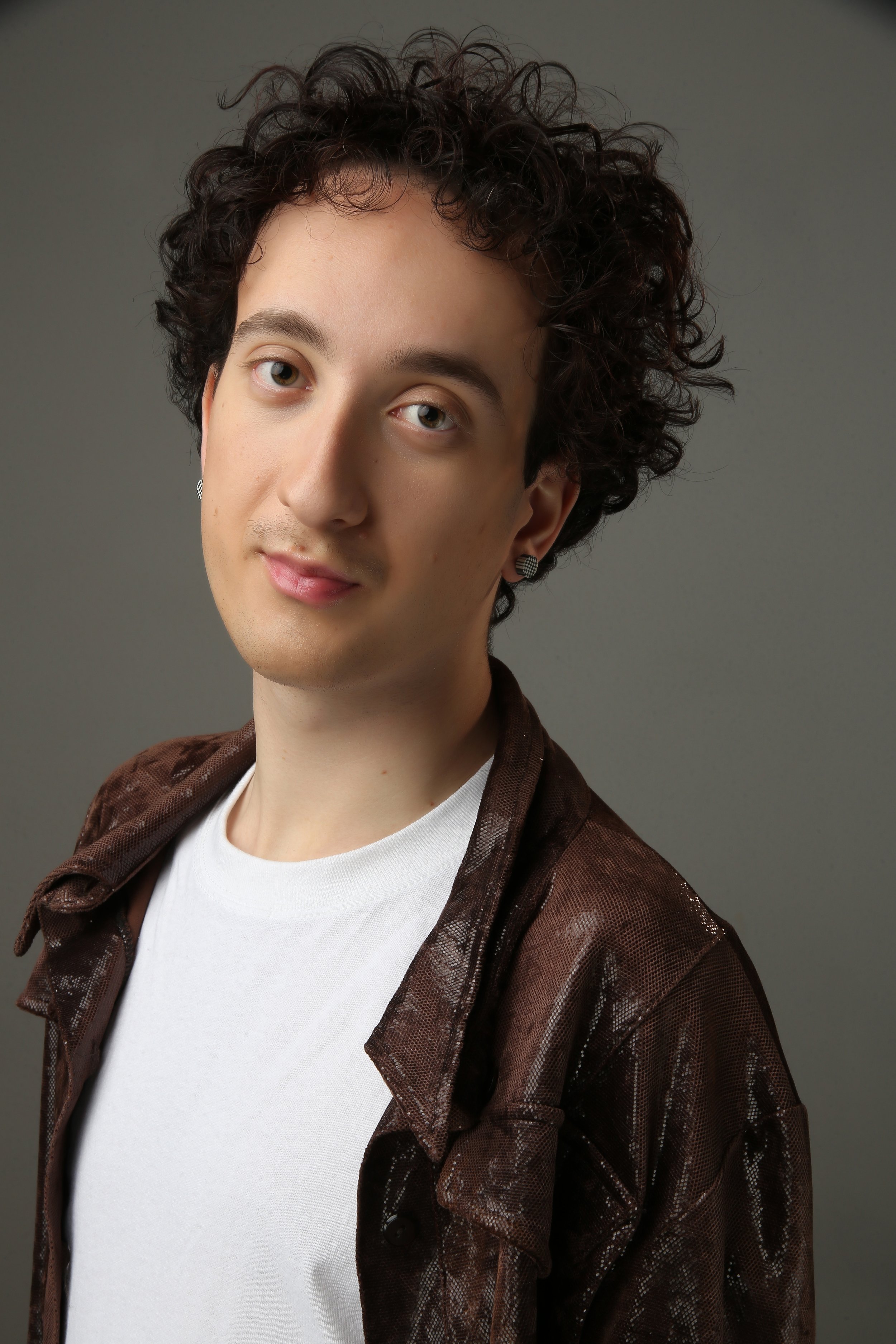
Writer, Daniel Leckerman